


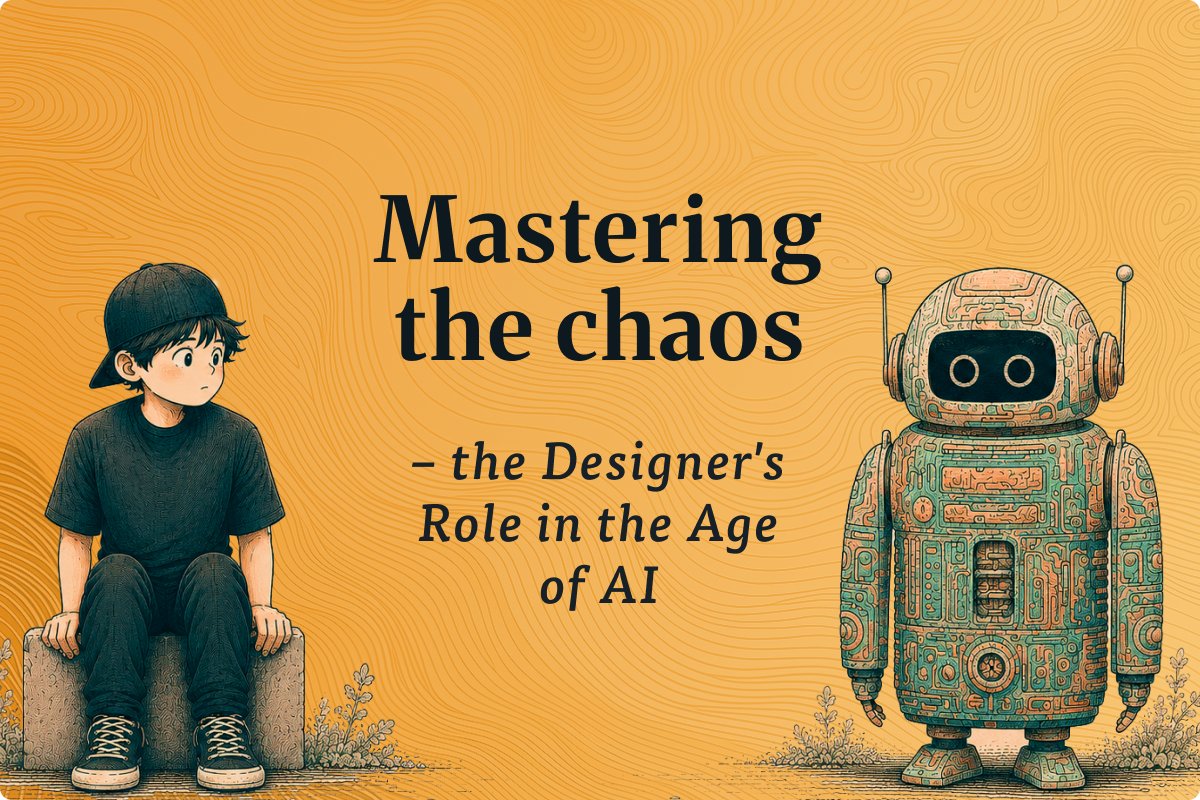
I get the panic. When the first cameras appeared, portrait painters watched their whole trade seem to evaporate overnight. The wealthy stopped commissioning painted portraits the moment photography could capture reality faster and cheaper. Doom and gloom, right?
Except that’s not what happened. Photography didn’t kill painting, it freed it. Painters stopped trying to recreate reality exactly and started exploring abstraction, impressionism, and forms nobody had tried before. The medium found what it was actually for once it stopped competing on the thing machines did better.
The conventional wisdom says AI spells doom for professional designers. It has this backwards. Designers are becoming more essential than ever, just not in the way most people think. AI made the easy stuff cheap, and in doing so it opened a wide gap between generating a design and knowing which one is worth building. Which means the real question is whether you’ll spot your new advantage before your competition does.
Handle the flood
The flood of generative AI tools is reshaping what it means to be a product designer. The old playbook, where designers follow the double diamond to the letter, crafting pixel-perfect UI and polishing visual details, no longer applies. AI has made design creation cheap and easy for almost anyone. Your product manager creates wireframes over morning coffee. Developers vibe code interfaces during lunch. Your CEO, yes, the one who prints emails, generates a credible-looking design from a text prompt.
To a seasoned designer this feels like watching robots take over the assembly line. Equal parts fascinating and terrifying. If everyone can design, what’s left for me? you wonder, staring at yet another AI-generated mockup that looks suspiciously competent. Yikes.
But the answer isn’t producing more visuals faster. Sure, I can birth a prototype in Lovable or Figma Make faster than you can say “design sprint,” but claiming the design process now takes minutes is like saying cooking is just heating food. (I’m looking at you, Yotam Ottolenghi, and your recipe timings.)
AI is a tireless idea machine, a creative tornado that never stops spinning, and it has the evaluative capacity of a goldfish. It can’t tell brilliance from garbage, innovation from imitation, or a solution from a pretty distraction. Worse, the feedback loops these models run on keep reinforcing the bad outputs. Take a look at your LinkedIn feed if you need proof.
Become a strategic curator
This is where your value shifts into something more strategic. You move from creator to curator. While AI spits out infinite variations of every interface pattern you can imagine, you’re the one separating the valuable concepts from the attractive waste, deciding which ideas deserve development budget, tying them to business objectives, and making sure they solve human problems instead of just looking good in your portfolio.
Your edge now rests on three things. Discernment, recognizing what will actually work in messy organizational and user contexts rather than what looks good in isolation. Taste, the kind that tells a strong solution from a merely competent one, built up over years of pattern recognition. And critical thinking, the habit of questioning the assumptions under a request before they harden into expensive mistakes.
Because generative AI has the design taste of an algorithm, which is to say none at all. The tools keep getting better at producing a competent screen, and they’ll keep improving. What they don’t do is tell you which screen is worth building, for whom, and why. That gap is about context and consequence, not pixels, and it isn’t the kind of thing a bigger model closes on its own.
Experienced designers have something AI can’t replicate: the hard-earned ability to see what actually works in human contexts, and to understand why it works.
AI-generated outputs are like cover bands. Technically proficient but rarely soul-stirring. They reflect the greatest hits of their training data, which lands you designs that are competent but about as groundbreaking as vanilla ice cream. Prompt a model for a design right now and you’ll get something clean, confident, and oddly generic, the visual equivalent of the average of everything it has ever seen.
Nurture your inner skeptic
AI’s biggest blind spot is that it’s a yes-man in algorithm form. Ask it to design something and it’ll execute your prompt with the enthusiasm of a golden retriever. No questions asked, assumptions unchallenged, biases amplified. And you don’t have to look far for where that leads. When xAI loosened Grok’s guardrails to make it less “woke,” the result wasn’t sharper judgment, it was a run of offensive outputs and regulators knocking on the door. A model pours its energy into whatever you point it at, useful or catastrophic, without ever asking whether it should.
So designers step into their most important job yet, as the designated dissenter in the room. You’re not just evaluating outputs, you’re interrogating the premises behind them. You’re the one asking the uncomfortable questions:
Are we solving the right problem for the right users?
Who actually benefits from this design choice?
What are we assuming about how users behave?
How does this line up with the wider business objectives?
What unintended consequences might come out of it?
You become the user’s advocate in a world where AI will happily optimize for engagement while ignoring whether people feel respected, understood, or shut out. And that job matters more every month, as the volume and speed of AI output climb.
Work with stakeholders and their cracks at AI
Your CEO just walked into your office with an AI-generated prototype that actually... doesn’t suck. Welcome to today, where senior stakeholders have become citizen designers, armed with generative AI and dangerous levels of confidence.
Your first instinct might be to build fortress walls around your design process, muttering about “amateurs” and “staying in their lane.” Don’t. That path leads to irrelevance faster than you can say “design thinking workshop.” Embrace the chaos instead. When a stakeholder shows up with an AI-generated concept, treat it like a rough sketch rather than a finished solution, and use the moment to start a real conversation.
So instead of resisting, do four things. Validate the thinking that got them there, without handing over your judgment. Pull out the useful parts of what they made, the bits that line up with user needs and the business. Point out the gaps they couldn’t have seen, the user considerations and technical constraints hiding under the surface. Then show how professional design work turns a starting concept into something you can actually ship.
Rather than being the gatekeeper who says no, become the translator who says yes, and here’s how we make it work for humans. That prototype Steve from C-suite just handed you? It might actually be the most coherent brief you’ve had all year.
Build better systems or drown
One more shift, and it’s the one that decides whether everything above actually scales. The explosion of AI-generated artifacts means a solid, scalable design system stops being a nice-to-have and becomes survival infrastructure. Without strong, intentional foundations, generative tools will flood your product with inconsistent experiences, redundant components, and enough technical debt to make your engineering team weep. Ask any developer who’s tried to wrangle AI-generated code without guardrails. The pain is visceral, and it isn’t just a tech-giant problem anymore.
That turns designers into system architects and stewards, building the frameworks and guardrails that let everyone, designers, engineers, stakeholders, and yes, AI itself, work at scale without wrecking quality or coherence. A strong system is leverage as much as defense, and it stretches your influence across the whole organization.
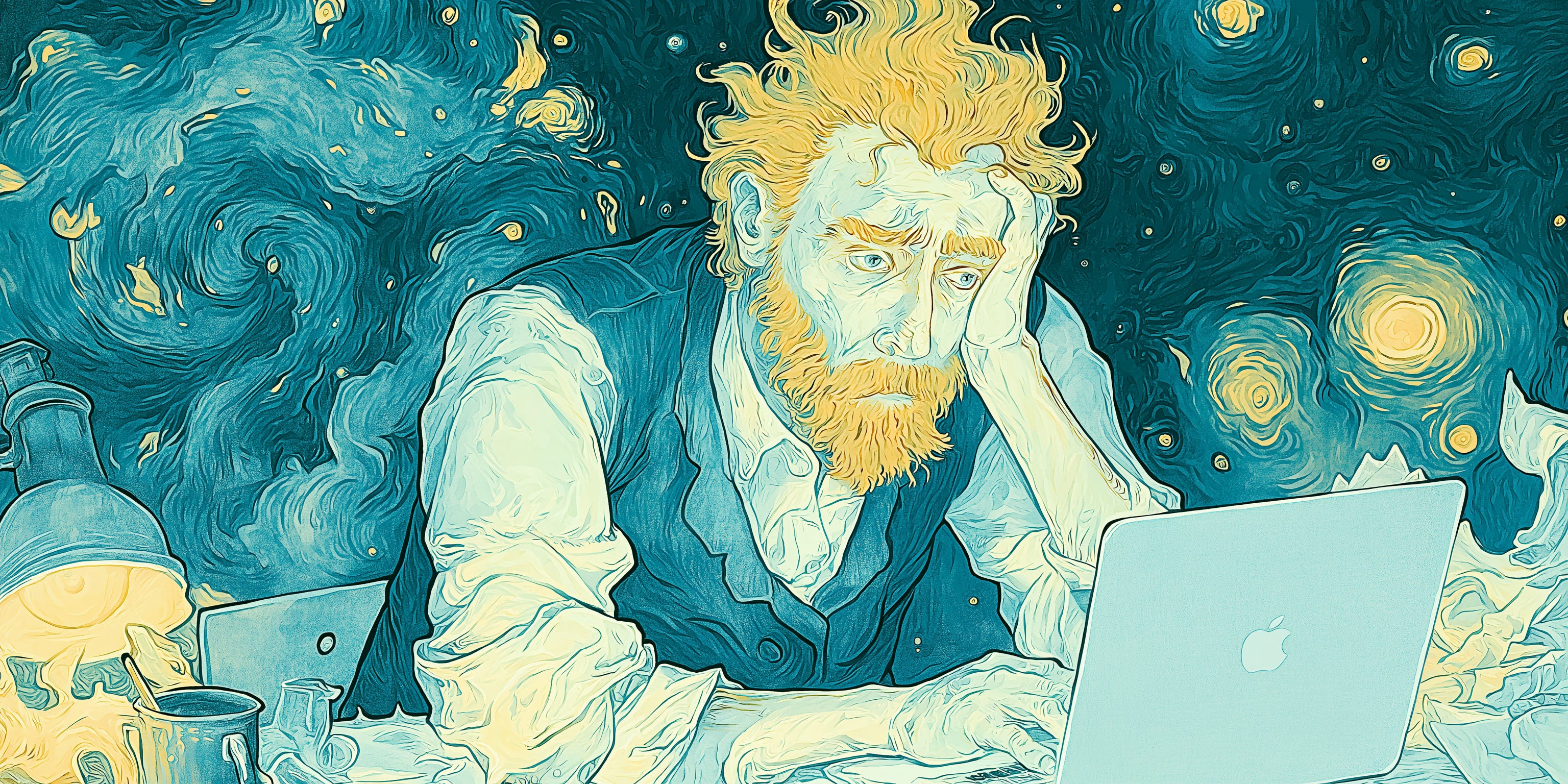
The painters who survived photography became the painters we remember.
Just as photography freed painters from the impossible job of competing with mechanical reproduction, AI frees designers from competing on speed and volume. The painters we celebrate now, Monet, Picasso, Van Gogh, found their value once they stopped trying to be human cameras.
Your role hasn’t disappeared. It’s turned into something more strategic, more influential, more central to whether the business wins. The flood of AI content isn’t destroying design, it’s showing who actually understands what design does beyond surface looks.
So take one project this quarter. Run it as the judgment layer rather than the pixel layer. Put the result in front of your CEO and let it make your argument.
Or keep running empathy workshops and wondering why the budget keeps going to engineering.
This is the first of 3 articles on this topic - find the other two here:


Hi, I’m Oscar - Founding designer at momondo, I’ve won a Material Design Award for Innovation, and I help design leaders succeed.